
Introduction
Discovering you have a hernia raises an immediate question: do I need surgery right now? The short answer is: it depends. Not every hernia requires urgent repair, but all hernias are worth evaluating. Understanding what type you have, how it is behaving, and the risks of waiting will help you and your surgeon make the right decision.
What Is a Hernia?
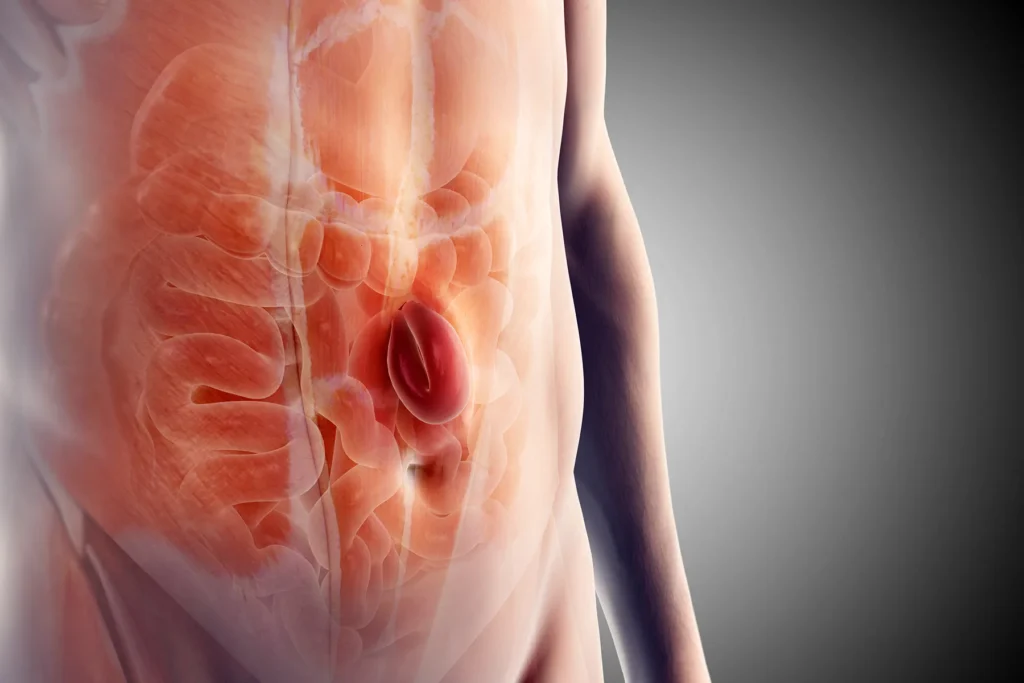
A hernia occurs when an internal organ or tissue pushes through a weak spot in the surrounding muscle or connective tissue. The result is usually a visible or palpable bulge, often in the abdomen or groin. Hernias do not heal on their own. Once the weakness is present, the opening tends to stay or grow over time. The bulge may get larger with coughing, straining, or standing, and may reduce when you lie down.
Common Types of Hernia
Inguinal hernias are the most common type, occurring in the groin, and are far more common in men. Umbilical hernias develop near the navel and can affect both adults and children. Incisional hernias form at the site of a previous surgical scar where the abdominal wall is weakened. Hiatal hernias are different from the others: they occur when part of the stomach pushes through the diaphragm into the chest and cause symptoms like acid reflux rather than a visible bulge. Each type has different characteristics and treatment considerations.
Can You Live With a Hernia Without Surgery?
For small, asymptomatic inguinal hernias in men, watchful waiting is sometimes acceptable in the short to medium term. Studies have shown that many patients with minimal symptoms can be safely monitored without immediate surgery. However, waiting is not a permanent solution. Most hernias grow over time and symptoms eventually develop. Watchful waiting requires regular review by a surgeon who can assess whether the hernia is changing. It is not appropriate for all patients or all types of hernia.
When Surgery Becomes Necessary
Surgery is recommended when a hernia causes persistent pain or discomfort, is growing in size, is interfering with daily activities, or shows signs of complication. A hernia that becomes irreducible, meaning the protruding tissue can no longer be pushed back in, requires prompt evaluation. A strangulated hernia, where the blood supply to the trapped tissue is cut off, is a surgical emergency. Umbilical hernias and incisional hernias are generally repaired when diagnosed because they carry a higher complication risk if left alone.
What Happens If a Hernia Is Left Untreated?
The main risk of leaving a hernia untreated is strangulation, which occurs when the herniated tissue becomes trapped and loses its blood supply. This causes sudden severe pain, nausea, vomiting, and requires emergency surgery. Elective hernia repair, done before complications develop, is far safer than emergency repair. Waiting until a complication forces surgery increases operative risk and recovery time significantly.
Laparoscopic Hernia Repair: What to Expect
Modern hernia surgery is performed laparoscopically in most cases. Three small incisions are made, a camera is inserted, and the hernia is repaired using a mesh that reinforces the weakened area. The procedure takes around 45 to 90 minutes. Most patients go home the same day or the next morning and return to light activities within a week. Recovery is significantly faster than open surgery and the recurrence rate is low when performed by an experienced laparoscopic surgeon.
Consult the Surgical Team at GI One Hospital
GI One Hospital’s surgical gastroenterology team, led by Dr Mukesh D. Rathod, provides assessment and laparoscopic repair for all types of hernia. If you have noticed a bulge, experienced groin or abdominal discomfort, or have been told you have a hernia and are unsure about the next step, a surgical consultation will give you a clear answer.
Amrut-Sai Solitaire, Near Goldie Cinema, Station Road, Chhatrapati Sambhajinagar 431005
Call +91 9146035616 | +91 9850835616 | Website: gionehospital.com
Conclusion
Hernias do not always need immediate surgery, but they do not resolve on their own. The decision between watchful waiting and repair depends on the type of hernia, its size, your symptoms, and the risk of complications. Small and symptom-free hernias in suitable patients can be monitored, but the window for elective repair is almost always preferable to emergency repair after a complication. An early consultation gives you the information to make a safe and informed decision.
FREQUENTLY ASKED QUESTIONS (FAQs)
Q1: Does a hernia always need surgery?
Not always immediately, but hernias do not heal on their own. Small asymptomatic hernias may be watched for a period under medical supervision. However, most hernias grow over time and eventually require repair. The risk of waiting is that complications such as strangulation may force emergency surgery, which carries higher risk than planned repair.
Q2: What does a hernia feel like?
A hernia usually presents as a soft bulge or lump, typically in the groin or abdomen. The bulge often becomes more prominent when standing, coughing, or straining and may reduce when lying down. Some hernias cause dull aching, pressure, or sharp pain with activity. Others are painless.
Q3: Is hernia surgery major surgery?
Laparoscopic hernia repair is a minimally invasive procedure performed under general anaesthesia. It involves three small incisions, a short operative time, and rapid recovery. Most patients go home the same day or next morning and return to light activities within a week. It is considered low-risk when performed by an experienced surgeon.
Q4: Can a hernia become dangerous?
Yes. A hernia that becomes strangulated, where blood supply to the trapped tissue is cut off, is a surgical emergency. Symptoms include sudden severe pain, a hard or tender lump that cannot be pushed back, nausea, and vomiting. This requires immediate surgical attention.
Q5: What causes a hernia?
Hernias develop at points of weakness in the abdominal wall. Contributing factors include previous surgery (incisional hernia), congenital weakness (inguinal hernia), chronic straining from constipation or heavy lifting, obesity, chronic cough, and ageing. They can occur at any age.
Q6: What is the difference between inguinal and umbilical hernia?
Inguinal hernias occur in the groin and are more common in men. Umbilical hernias occur at or near the navel and can develop in adults who are obese, pregnant, or have had prior abdominal surgery. Both are repaired surgically but the approach and mesh placement differ.
Q7: How long is recovery after laparoscopic hernia surgery?
Most patients resume light activities within five to seven days. Driving is usually possible within one to two weeks. Strenuous activity and lifting should be avoided for four to six weeks. Full return to work depends on the nature of your job, with desk workers recovering faster than manual workers.
Q8: Can a hernia come back after surgery?
Recurrence is possible but uncommon with modern mesh-based repair performed laparoscopically. The lifetime recurrence rate after laparoscopic repair is around two to three percent when performed by an experienced surgeon. Maintaining a healthy weight and avoiding heavy lifting in the early recovery period reduces this risk further.
Q9: Is hernia repair possible without mesh?
Mesh-based repair is currently the standard of care because it has significantly lower recurrence rates than non-mesh (tissue repair). In some cases, such as small umbilical hernias in children, repair without mesh is appropriate. Your surgeon will recommend the best approach based on the hernia type and size.
Q10: Where can I get hernia surgery in Aurangabad?
GI One Hospital, Station Road, Chhatrapati Sambhajinagar offers laparoscopic hernia repair. Dr Mukesh D. Rathod, MS, FIAGES, FALS, leads the surgical gastroenterology team. Call +91 9146035616 or visit gionehospital.com to book a consultation.